
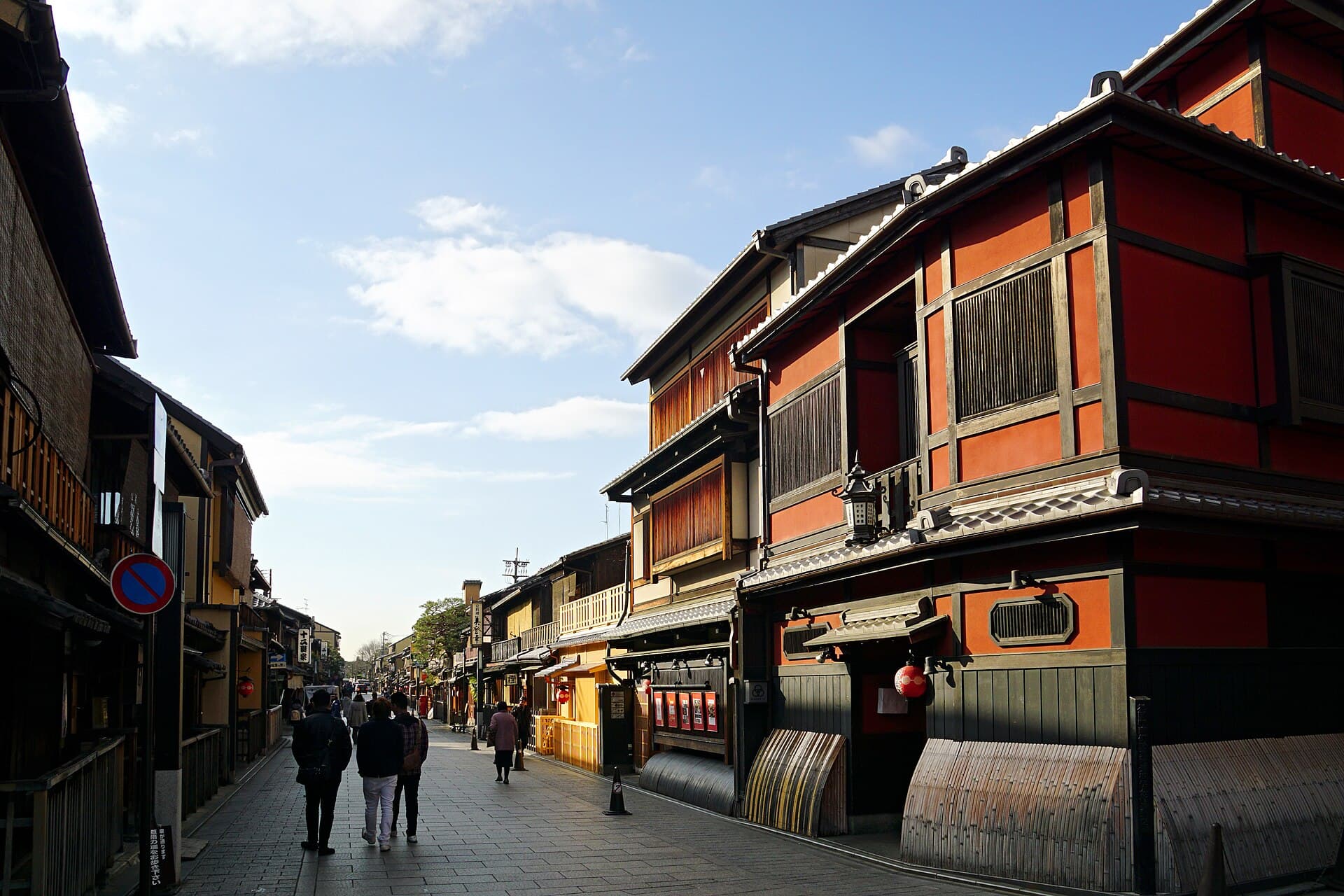
Kyoto (京都) holds a special place in the world of ryokan. It isn't a major hot spring destination, yet it's the first place many people think of when they hear the word "ryokan" — because the ryokan tradition itself was perfected here, through Kyoto's *omotenashi* hospitality and tatami-room architecture. Many of Japan's most prestigious ryokan are in Kyoto and have no hot spring at all.
The essence of a Kyoto ryokan isn't the onsen — it's the architecture, the garden, the kaiseki dinner, and the hospitality. If a hot spring is what you're after, pair your stay with northern Kyoto or a nearby onsen town.
Two kinds of Kyoto ryokan
Classic ryokan (sukiya-style architecture)
Born from tea-ceremony culture, *sukiya* (数寄屋) architecture brings corridors of exposed natural wood grain, tatami-seated parlors, and a small *tsuboniwa* courtyard garden. Dinner is a multi-course Kyoto-style kaiseki served in your room or a private dining space. A single night here is a cultural experience in itself — in Kyoto, it's fair to say the room rate covers the meal, the architecture, and the hospitality all at once. New to kaiseki? Start with our kaiseki dining guide.
Machiya stays
A style built around renting an entire traditional townhouse. There's no set meal service, but you get more freedom, which makes it a great fit for families or longer stays. Choose a classic ryokan if you want the full ryokan hospitality experience, or a machiya if you'd rather live like a local in Kyoto's back streets.
Choosing a neighborhood
Gion and Kawaramachi — the classic first-timer's pick
Walking distance from Yasaka Shrine and Hanamikoji. Ideal if your priority is evening strolls and dining out. If the crowds during peak season bother you, look for a smaller ryokan tucked down a side lane.
Higashiyama — for temple pilgrimages
A hillside district dense with temples like Kiyomizu-dera and Nanzen-ji. Walking the approach paths early in the morning before the crowds arrive is a privilege reserved for overnight guests.
Arashiyama — river and bamboo grove
The western district famous for the Togetsukyo Bridge and the bamboo grove path. Many ryokan here have riverside view rooms, and the morning view during autumn foliage season is spectacular.
If you also want an onsen in Kyoto
- Kurama Onsen: 30 minutes from downtown on the Eizan Railway, with a mountain open-air bath.
- Yunohana Onsen: A quiet onsen town near Arashiyama, in Kameoka.
- Amanohashidate and Kinosaki: A limited express from Kyoto Station reaches the northern coast — a popular route pairs Amanohashidate, one of Japan's Three Scenic Views, with a night at Kinosaki Onsen.
Getting there
- 1Kansai Airport to Kyoto: About 75 minutes on the Haruka limited express.
- 2Getting around town means buses and the subway. The key to a smooth trip is stashing your luggage in a Kyoto Station locker or leaving it at the ryokan front desk before and after check-in.
How to choose
- A special occasion, the best night out → a classic ryokan with Kyoto-style kaiseki (kaiseki filter)
- Easy access to stations and sightseeing → ryokan near the station
- Onsen on the side → Kurama, Yunohana, or a northern onsen town pairing (see all Kyoto ryokan)
💡 Prices in Kyoto nearly double during cherry blossom season (late March–early April) and autumn foliage (mid-to-late November), and popular ryokan can book out six months ahead. For the same budget, late spring (May–June) and early winter (early December) offer both great value and beautiful scenery.
Where can you experience this?
Book directly at Japan's best onsen towns with Ryokanear.