
Hakone (箱根) is, for many international travelers, the go-to choice for a first ryokan trip. The reason is simple — about 85 minutes from Tokyo on the Romancecar limited express, and you step off into a mountain hot spring town with volcanic steam still rising from the hillsides. If you want city sightseeing and a ryokan stay in the same short trip, nothing beats Hakone.
Hakone isn't a single hot spring — it's a collection of 17 separate onsen areas. Which district you stay in completely shapes what kind of trip you have.
How Hakone's Onsen Districts Differ
Hakone-Yumoto (箱根湯本) — The Standard First Visit
The gateway district where the train arrives, and Hakone's largest hot spring town. Shopping streets, food, and access are all at their best here. It has the widest choice of ryokan, plus plenty of day-use baths. If hauling luggage up mountain roads sounds unappealing, Yumoto is the answer.
Gora (強羅) — Museums and High-End Ryokan
A highland district at the end of the mountain railway line. Close to the Hakone Open-Air Museum and Gora Park, and home to a cluster of quiet, high-end ryokan. If you're after a room with its own private outdoor bath, Gora has the largest concentration.
Miyanoshita and Sounzan — Classic Charm and Views
Miyanoshita is the classic resort district, best known for the Fujiya Hotel, while Sounzan connects by ropeway to the volcanic Owakudani area. Mountain-view outdoor baths are the draw here.
Lake Ashi Shore (Moto-Hakone and Hakone-machi) — Mount Fuji Views
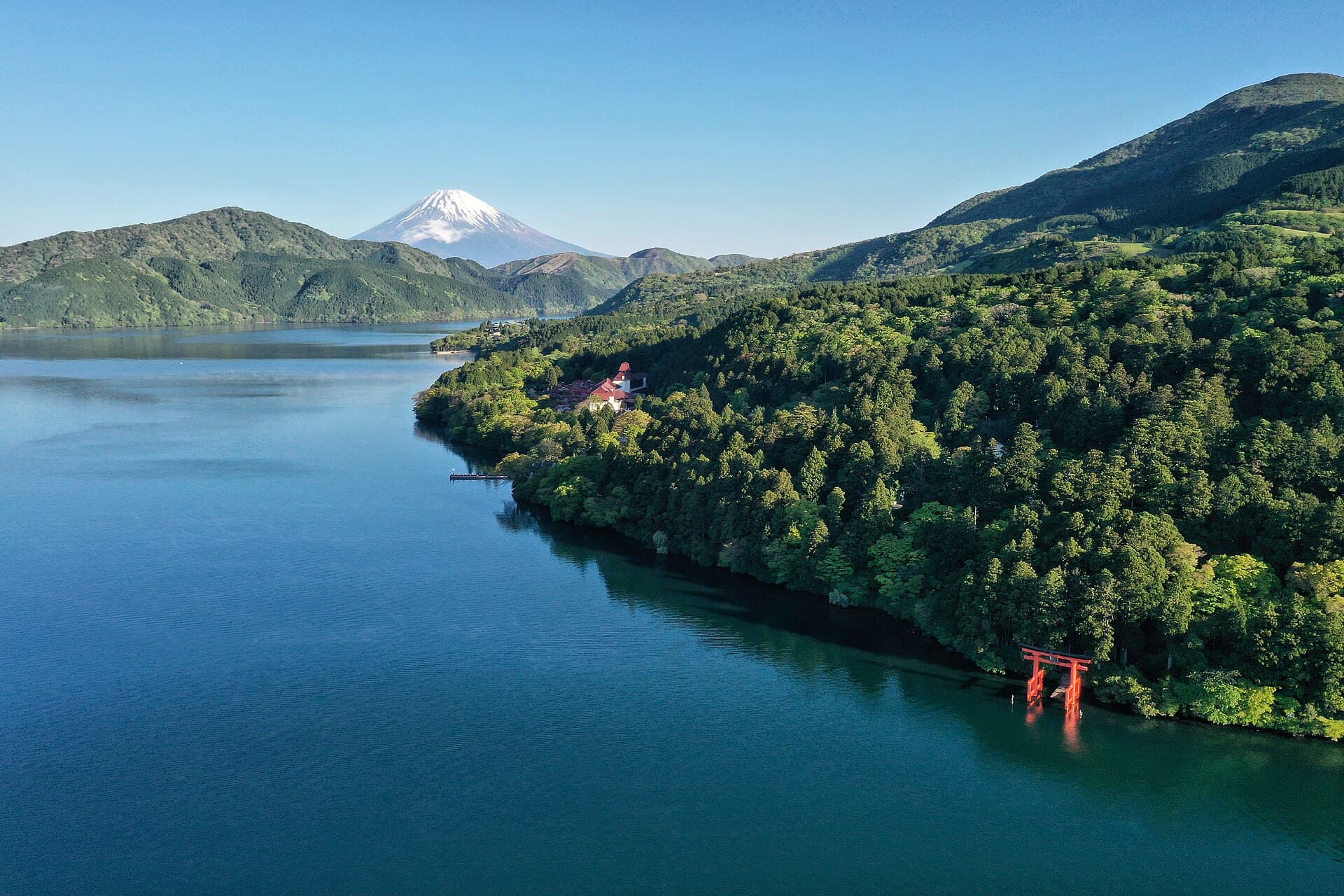
On a clear day, you can see Mount Fuji across the lake from this district. The Hakone Shrine torii gate and the pirate-ship cruise are both here. If a Fuji-view outdoor bath is on your list, aim for a lakeside ryokan. (Winter mornings give you the best odds of a clear view.)
What's the Water Like?
Hakone draws on many different source springs, so the water character varies by district. Yumoto's water is mostly gentle simple and chloride springs — an easy introduction for onsen beginners — while the milky white sulfur water (nigoriyu) piped in from Owakudani turns up at ryokan around Gora and Sengokuhara. If you're curious about water types, start with our guide to onsen types and their effects.
Getting There, and the Free Pass
- 1Shinjuku to Hakone-Yumoto: about 85 minutes direct on the Odakyu Romancecar. Seats are reserved, so book ahead.
- 2Hakone Free Pass: unlimited use of the mountain railway, cable car, ropeway, pirate ship, and buses. Sightseeing in Hakone essentially means riding the full transport loop — railway to cable car to ropeway to boat to bus — so for a two-day trip this pass almost always pays for itself.
- 3If you're coming by shinkansen, you can also transfer at Odawara Station.
How to Choose a Hakone Ryokan
- First visit, short trip → Yumoto district, ryokan with an open-air bath
- Couples, anniversaries → Gora district, ryokan with a private in-room bath
- Chasing a Mount Fuji view → Lake Ashi shore, winter season
- Onsen enthusiasts → ryokan with their own sulfur nigoriyu source (source-spring filter)
💡 Hakone is hugely popular with domestic Japanese travelers too, so for weekends and the autumn foliage season (November), book two months ahead to be safe. Weeknight stays at the same ryokan often run 20–30% cheaper.
Ready to book? Compare live rates now at Hakone ryokan, real-time lowest prices. Torn between Hakone and Yufuin? Read our Hakone vs. Yufuin data comparison first.
Where can you experience this?
Book directly at Japan's best onsen towns with Ryokanear.