
"Hakone or Yufuin — which one's better?" It's the question almost everyone planning their first ryokan trip ends up asking, and the usual answer — "honestly, both are great" — isn't much help. So we compared real data across 149 ryokan in the two regions. The short answer: this isn't a question of which is *better*, it's a question of which kind of trip you're after.
One-line summary — Hakone is a "sightseeing" hot-spring trip (a full circuit past Mt. Fuji, lakes, and museums), while Yufuin is a "staying put" hot-spring trip (a quiet stay that's complete within one small town). Your travel style should decide.
The basics
- Number of ryokan: 77 in Hakone vs. 72 in Yufuin — a similar-sized market in both.
- Median lowest rate (two guests, one night): Hakone around $290 vs. Yufuin around $260
- Entry-level pricing (25th percentile): Hakone around $190 vs. Yufuin around $190 — practically identical at the low end
- Top-tier threshold (75th percentile): Hakone around $360 vs. Yufuin around $340
In short, the entry price is the same, but Hakone's ceiling is a bit higher. That's driven by its classic resort hotels and newer high-end builds — if your budget is under $200, both regions offer plenty of options, so price alone isn't a reason to pick one over the other.
The amenity data — a few surprises
Share of properties with each feature (Hakone vs. Yufuin):
- In-room open-air bath: 61% vs. 75% — Yufuin wins
- Communal open-air bath: 88% vs. 93% — roughly even
- Private rentable bath: 62% vs. 61% — a tie
- Source-fed (kakenagashi) water: 71% vs. 69% — a tie
- Kaiseki dinner: 75% vs. 72% — a tie
- Walking distance to a train station: 30% vs. 21% — Hakone wins
Here's the surprise: Hakone's Gora district has the stronger reputation as *the* private-onsen destination, but the numbers say Yufuin actually leads (75% of properties have an in-room open-air bath). That reflects Yufuin's roots as a town of small, standalone (hanare) cottages. Hakone, on the other hand, has more station-adjacent ryokan built around its mountain railway — better news if you're traveling without a car and don't want to lug luggage far.
Access — usually the real deciding factor
- Hakone: about 85 minutes from Shinjuku in Tokyo on the Romancecar — an easy add-on to a 3–4 night Tokyo itinerary.
- Yufuin: about 2 hours 20 minutes from Hakata in Fukuoka on the reserved-seat Yufuin no Mori limited express (book a month ahead), or a 1 hour 40 minute direct airport bus.
In practice, this comparison often comes down to "is your trip built around Tokyo or Fukuoka?" If your flights are already booked, that decides it — no need to overthink. If both cities are new to you, use the style comparison below instead.
Mood and the shape of a day
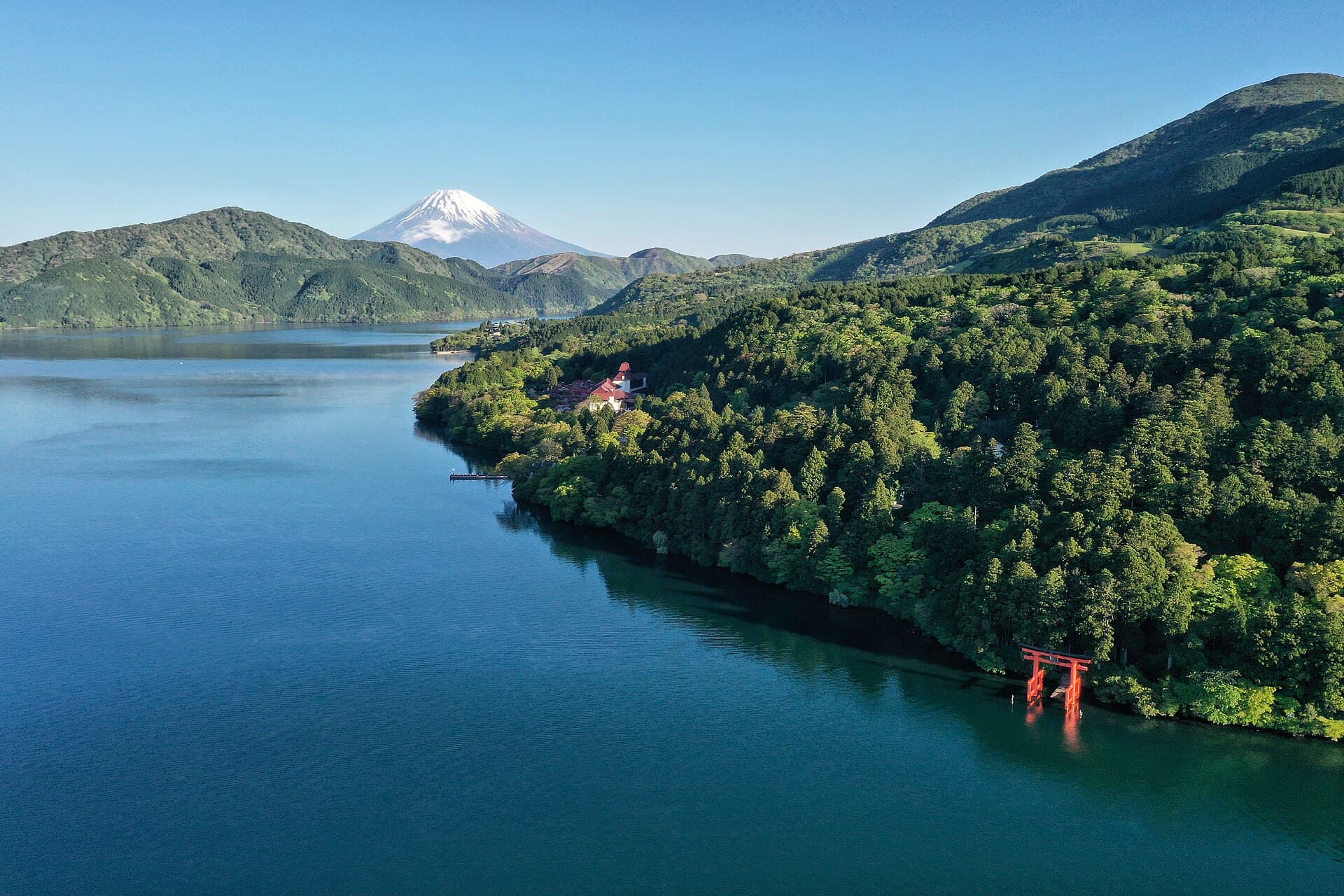
A day and a half in Hakone is a loop. Mountain railway → cable car → ropeway (over the Owakudani volcanic valley) → pirate ship across Lake Ashi → bus back — the scenery and mode of transport keep changing, making it a dynamic, sightseeing-driven trip. Museums like the Hakone Open-Air Museum add to the density of things to do, and on a clear winter day you might catch a view of Mt. Fuji as a bonus.
A day and a half in Yufuin is a walk. Craft shops and cafés along Yunotsubo Street, morning mist over Lake Kinrin, Mt. Yufu visible from almost anywhere — it's a quiet trip that's complete within a single town, no transit required. The streets after the day-trippers clear out in the evening are a privilege reserved for overnight guests.
So, which one fits you?
- First trip to Japan, built around Tokyo → Hakone. Access, sightseeing, and train-station convenience are all strengths → Best open-air bath ryokan in Hakone
- Couples, a quiet anniversary trip → Yufuin. That 75% in-room open-air bath rate says it all → Best in-room open-air bath ryokan in Yufuin
- Traveling with parents or family → Toss-up. Prefer less moving around, pick Yufuin; prefer more to see and do, pick Hakone
- Chasing a wide range of hot springs → Hakone (17 distinct hot-spring districts), or pair Yufuin with Beppu — the Kyushu combo covers a wider range of water types
- Budget above all → Either region's bottom 25% (around $190) is essentially the same. You might also consider better-value regions like Nagano or Beppu
💡 You can do both — with an open-jaw ticket (fly into Tokyo, out of Fukuoka, or vice versa), a night in Hakone plus a night in Yufuin fits into a single trip. The shinkansen connection between them takes about 5 hours if that feels manageable, or there's a 1 hour 45 minute domestic flight.
Want to go deeper? Read the full guides: Hakone · Yufuin. Once you've decided, compare live lowest rates at Hakone ryokan · Yufuin ryokan.
Where can you experience this?
Book directly at Japan's best onsen towns with Ryokanear.
References & Data Sources
- Data basis: Ryokanear database — 77 ryokan in Hakone and 72 in Yufuin (active properties with original content), prices are the median of each property's lowest two-guest, one-night rate, aggregated July 2026
- USD figures converted from KRW at the rate used at time of aggregation, rounded to the nearest $10. Actual booking prices vary by date, room type, and whether meals are included.