
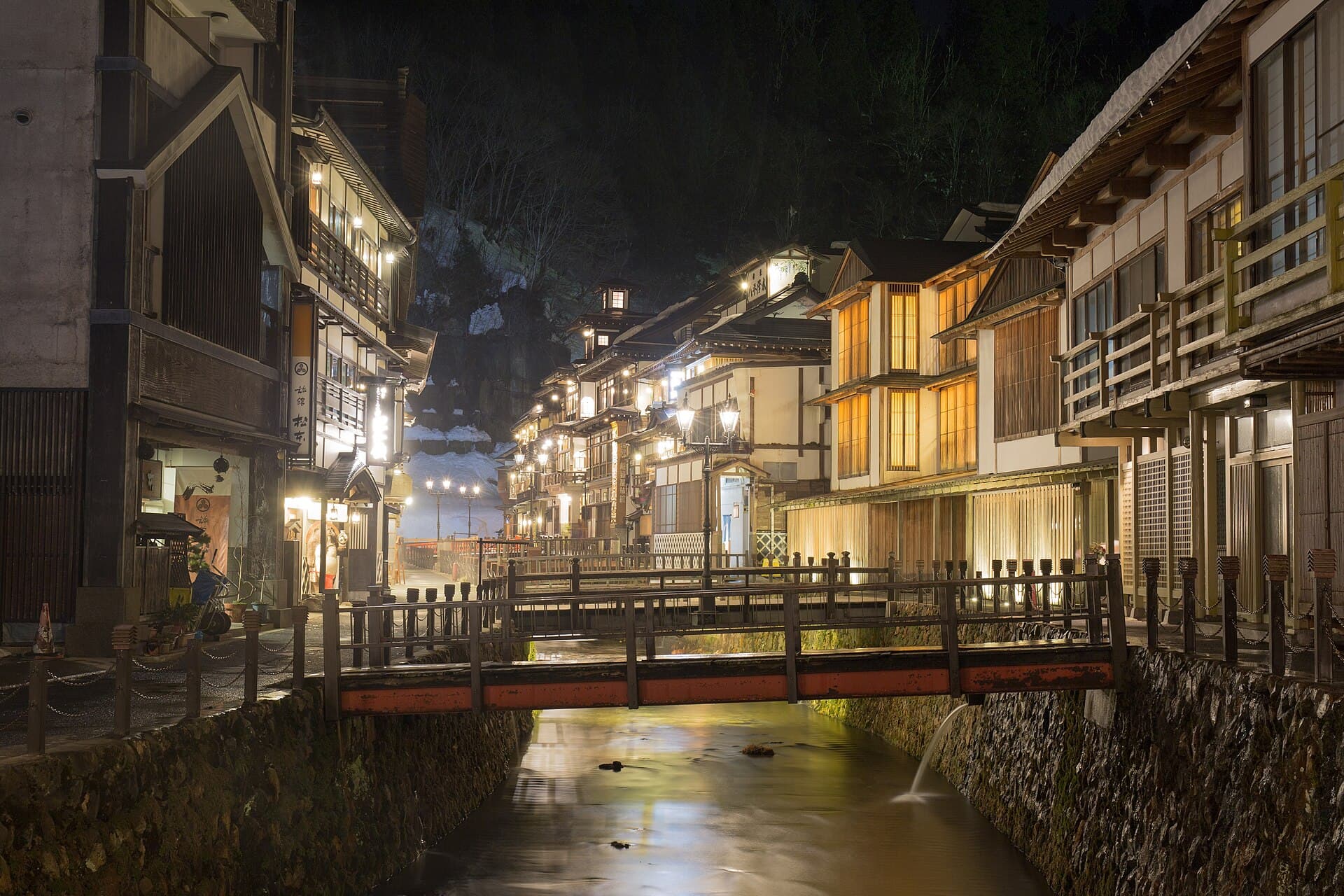
An open-air bath in falling snow — in Japanese, yukimi-buro (雪見風呂). Sitting shoulder-deep in hot water, watching snow settle silently in the cold air, is about as close as it gets to the final boss of Japanese onsen travel. There's just one problem: you can't book snow. So the real trick to a snow-view onsen trip is choosing a region where snow is a near-certainty, not a gamble.
The formula for a snow-view bath: heavy-snowfall region + open-air bath + December through February. Line up all three and snow is nearly guaranteed.
Where Snow Is (Nearly) Guaranteed
Hokkaido — The Safest Bet (December–March)
In Noboribetsu and Jozankei, snow is a given from December through March. Winter at Jigokudani (Hell Valley), where sulfur steam mixes with swirling snow, is overwhelming in the best way. → Best Hokkaido Snow-View Ryokans · Noboribetsu Guide
Niigata (Echigo-Yuzawa) — The Original "Snow Country"
The setting of Kawabata Yasunari's novel *Snow Country*. Snowfall here is among the heaviest in the world, so from mid-December to early March, snow is essentially a sure thing. Its biggest advantage: just 80 minutes from Tokyo by shinkansen. → Browse Niigata Ryokans
Nagano — Snow Views and Snow Monkeys (December–February)
Yudanaka and Shibu Onsen are famous for pairing a stay with the nearby Snow Monkey Park, where wild macaques soak in their own snowy hot spring. Easy access to ski resorts like Nozawa and Hakuba is another draw. → Best Nagano Snow-View Ryokans
Kusatsu, Gunma — The Closest Snow Views to Tokyo (December–February)
Sitting at roughly 1,200 meters elevation, Kusatsu sees far more snow than is typical for the greater Tokyo region. A nighttime walk past the snow-dusted Yubatake hot spring field is a winter-only scene unique to this town. → Kusatsu Guide
Practical Tips for Winter Onsen Travel
- You'll be hot in the bath and freezing on the way there. The hallways and changing rooms leading to the bath are often unheated, so a ryokan with an in-room open-air bath really pays off in winter.
- Bathe in short sessions, several times. The temperature swing between hot water and cold air puts extra strain on your body in winter — soak for 5–10 minutes at a time, and hydrate before and after.
- Public transit is the answer for getting around on snow. Skip the rental car unless you have real experience driving in snow, and take advantage of the shuttle service most ryokans run to and from the station.
- Late December through early January (the New Year holidays) and February's Sapporo Snow Festival are peak season — book two to three months out to be safe.
💡 Within winter, mid-January to early February offers the best balance of snow odds and price. Simply avoiding the New Year peak can make the exact same ryokan noticeably cheaper.
Ready to wait out the snow? Browse snow-view ryokans nationwide and pick one now. First time at an onsen? Our Onsen Etiquette Guide is worth a read too.
Where can you experience this?
Book directly at Japan's best onsen towns with Ryokanear.